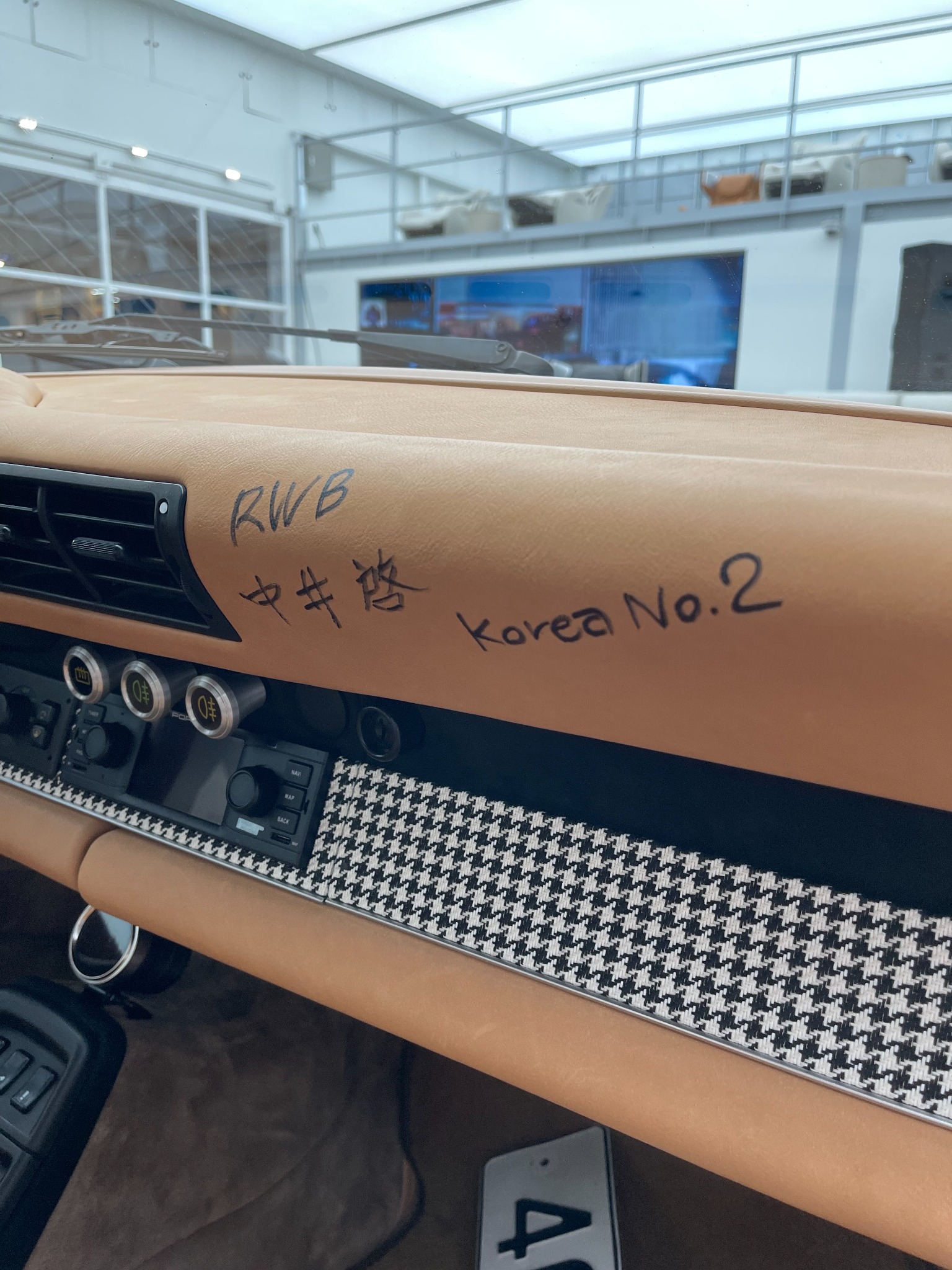
HANGANG, Part 4 — After Three Years, the Build Begins
A 1992 Porsche 964 Carrera 4 and the people who became part of its story in Korea.
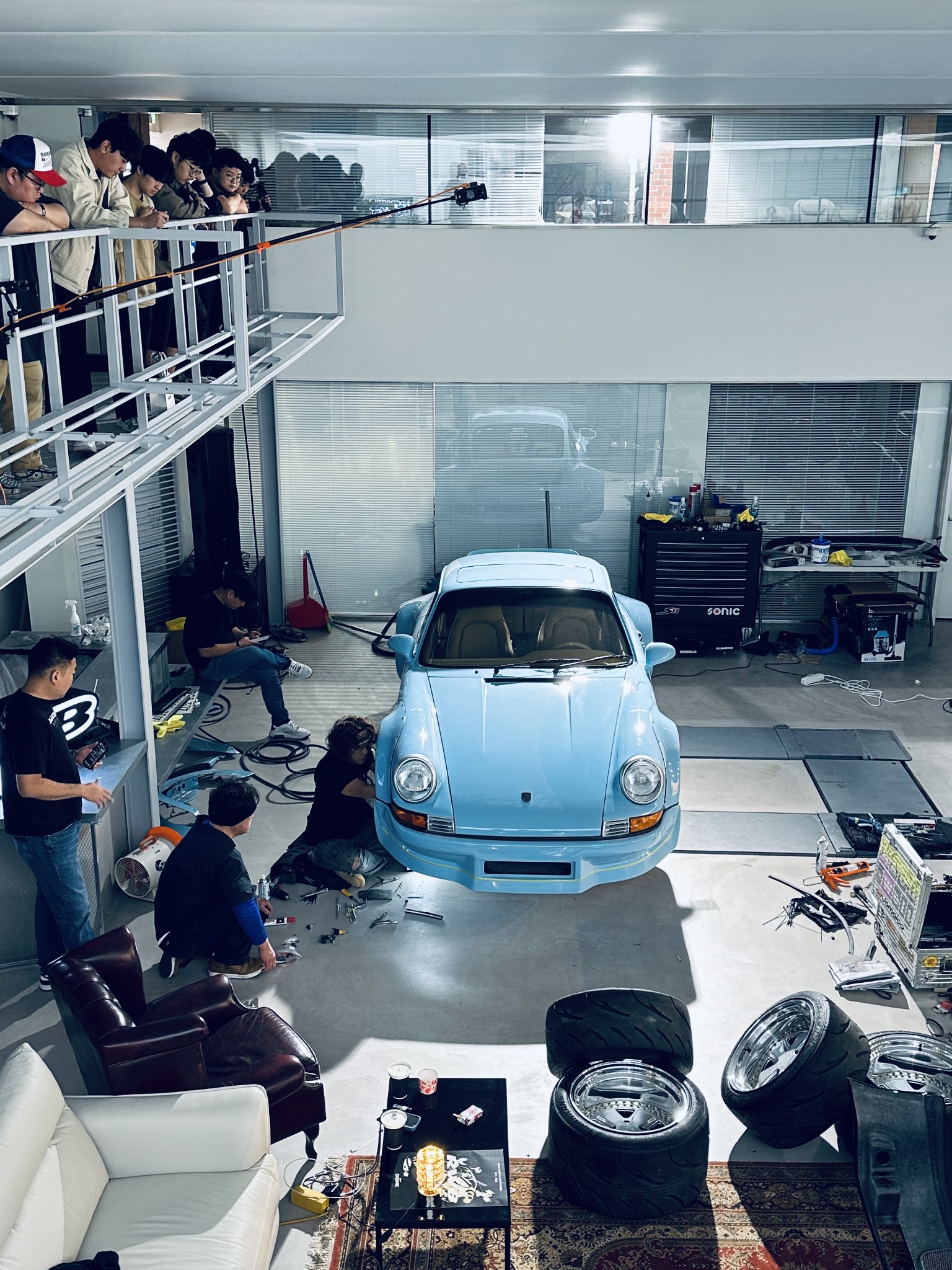
I waited three years to transform a car. What I wanted included more than a finished Porsche: I wanted Nakai-san to build it in Korea, to witness the work and to spend that time with the people gathered around it. The experience itself was part of the dream.
A 964 with a story of its own
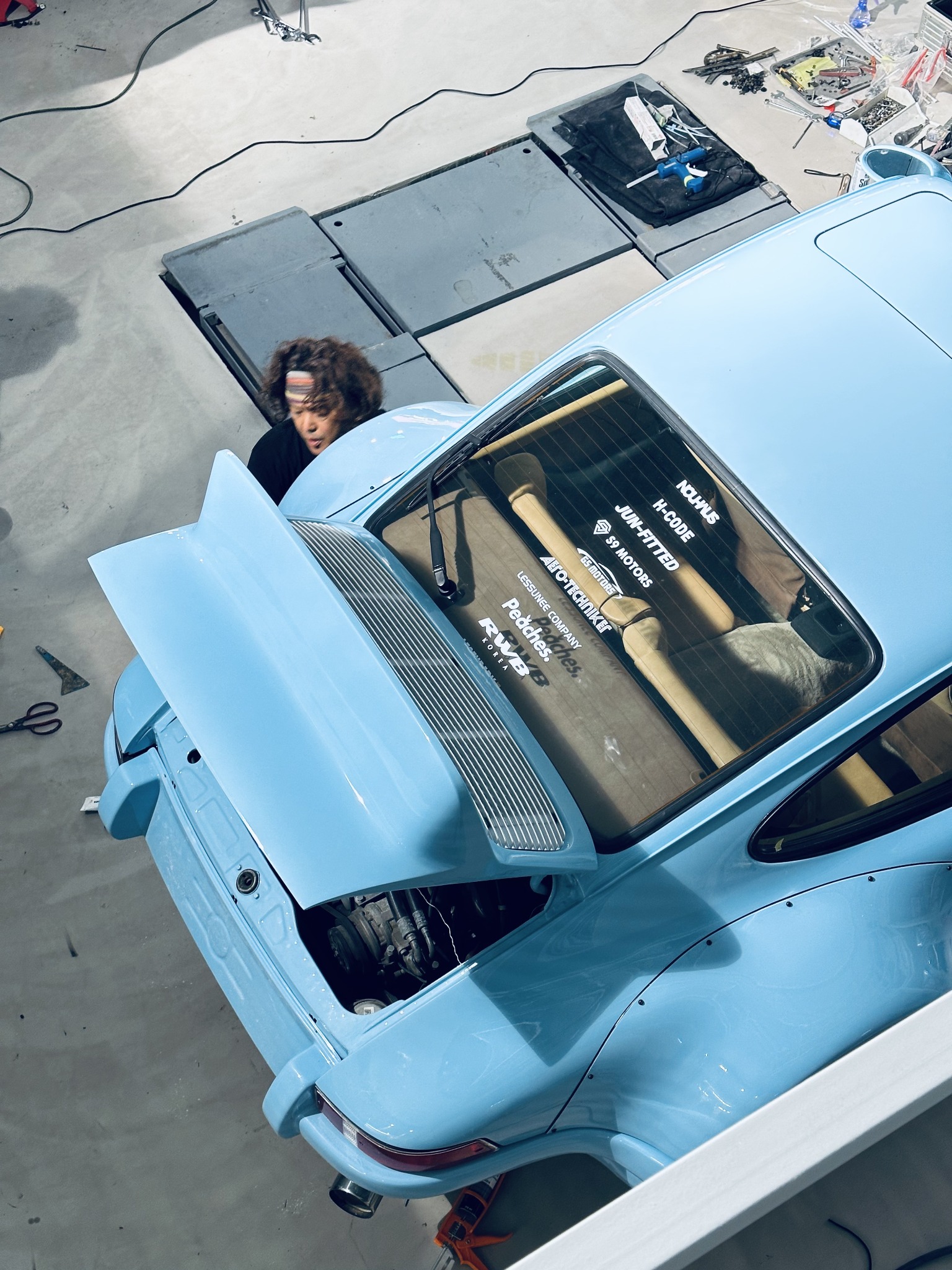
HANGANG began as a 1992 Porsche 964 Carrera 4 with a manual gearbox. Its condition was far from perfect. I restored the interior and exterior, commissioned a full repaint and engine overhaul, and converted it to a 901-style backdate. Checked upholstery and a handmade gear knob with a gold-plated LEGENDARY logo added personal details. The car even appeared in a Porsche owner-story film for the Korean launch of the 992. The RWB build would be its next chapter.
Being there as it took shape
During the long wait, sending the car to Japan for the build was suggested. I chose to wait in Korea because I wanted to see the transformation and meet the people who shared that moment. Another car was built in Japan first, making HANGANG Korea No.2. It was still the first car Nakai-san built on Korean soil. I have never regretted waiting.
What drew me to RWB
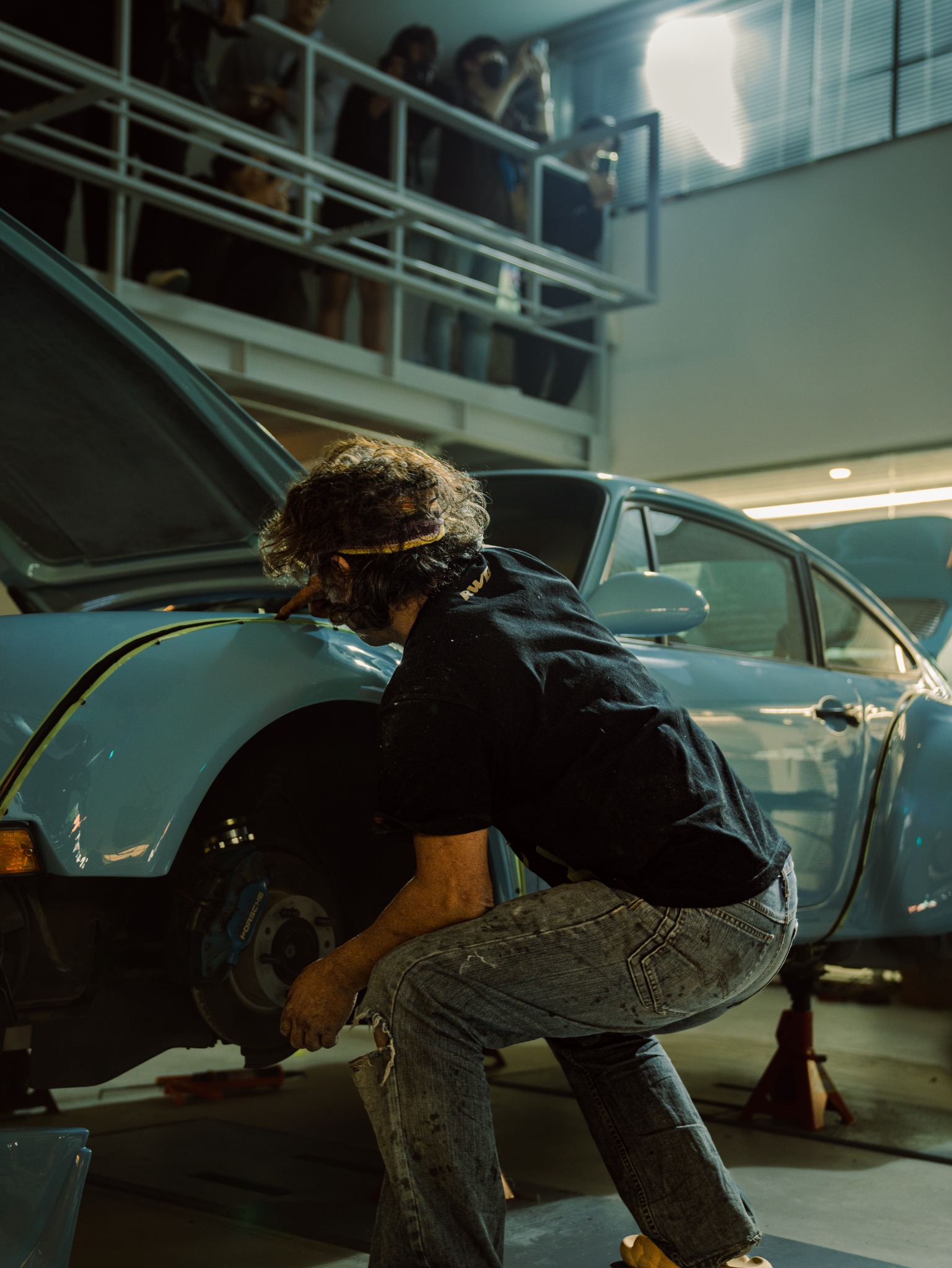
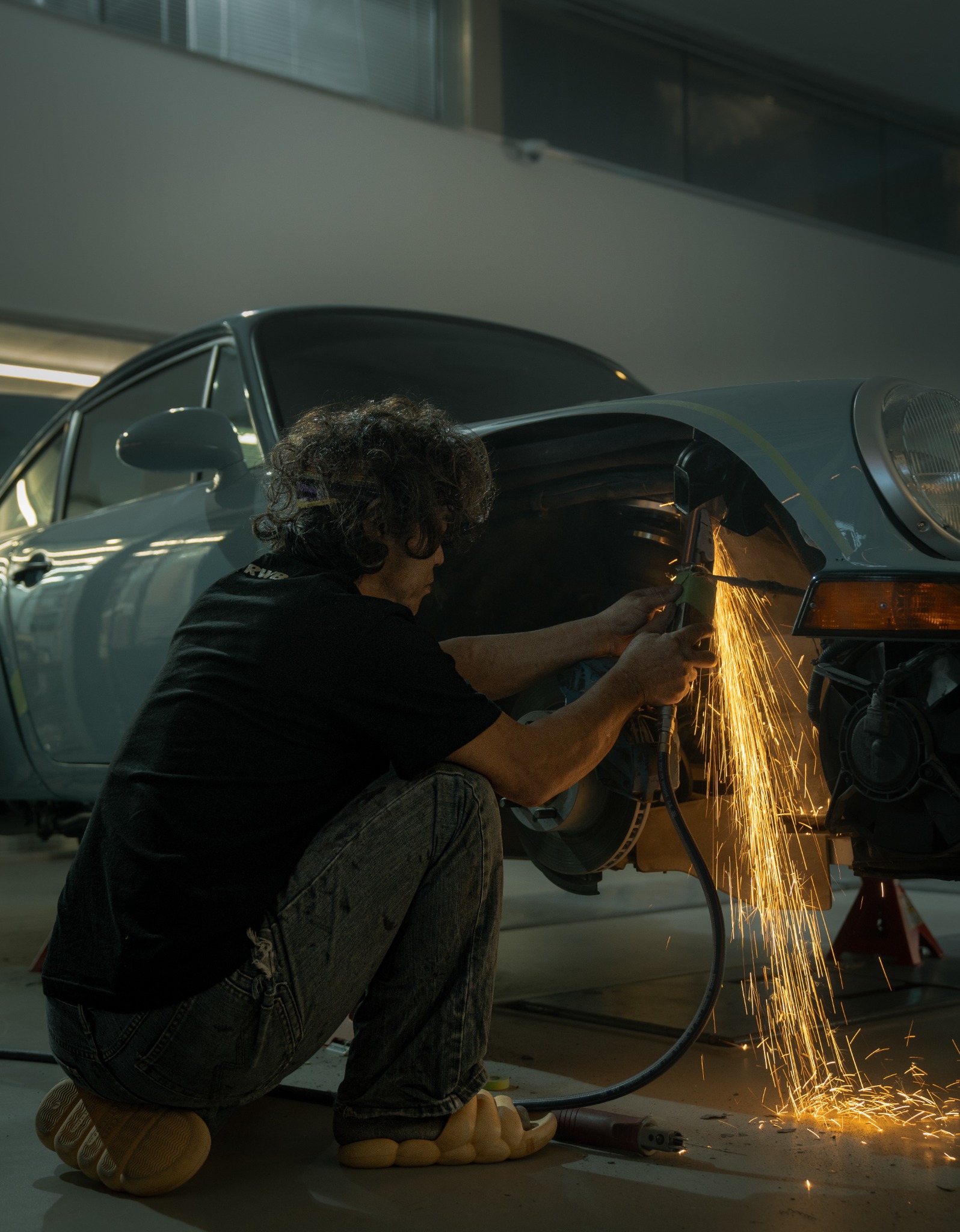
The wide fenders caught my attention, but the people and their individual cars kept it. I liked a culture in which owners could express their preferences through color, interiors, wheels and performance. For HANGANG, I wanted another layer of personality on the 964 I had already spent years making my own.
Meeting Nakai-san beyond the screen
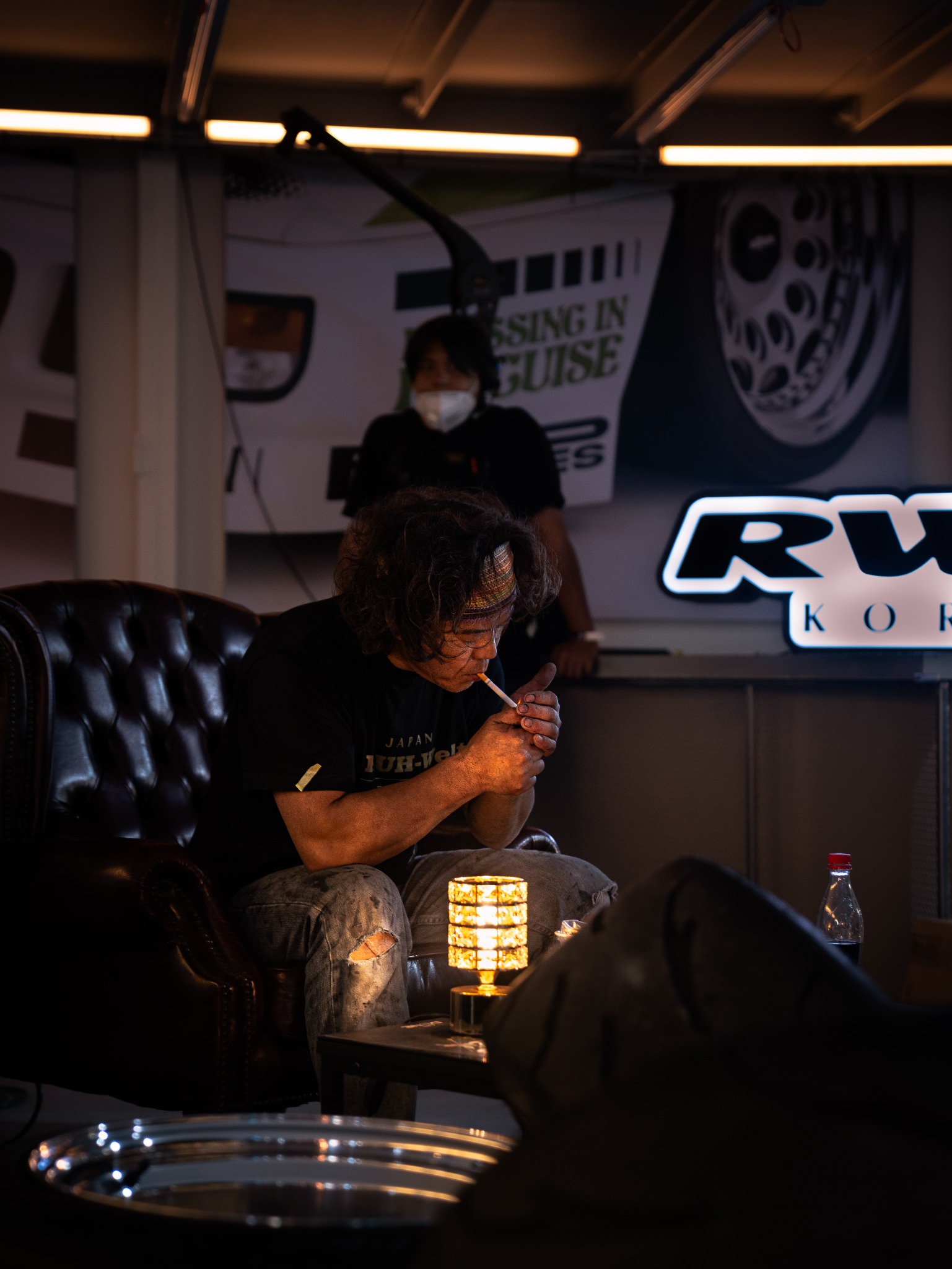
When I first met Nakai-san in Korea, I recognized the charisma I had seen in films. Over meals and conversations about cars, I also met someone wonderfully sincere and passionate about what he loved. His enthusiasm for Korean food was especially memorable. Watching him enjoy doenjang-jjigae and gukbap made those meals feel all the more warm and familiar.
By that time he was no longer drinking alcohol, though his distinctive cigarette breaks remained part of the scene. From our conversations, his collecting and his enthusiasm centered entirely on Porsche. To me, he was a true Porsche obsessive in the most affectionate sense. Waiting in Korea made room for these conversations as well as the build.
The people around the car
Meeting the crew—Toshiya-san, Toshi-san and Yuki—was another pleasure. Sharing this chapter of my car’s life with them in Korea made it particularly meaningful. The friendship and connections that had drawn me to RWB became something I could experience firsthand. HANGANG carries those memories of people as well as the work itself.
Beyond the finished shape: setting the car up to drive
Even after the car looked complete, the work continued. Nakai-san spent a surprisingly long time on the final shock absorber and wheel alignment settings. Watching his sustained concentration reminded me of the way a racing team prepares a car.
That scene remains an important part of my memory of the build. Seeing him devote so much time to how the car would drive, even after its visible transformation was complete, made his commitment to Porsche feel very real to me.
In the passenger seat, with Nakai-san at the wheel
At last, the settings were finished and it was time for a test drive. Nakai-san took the wheel, and I sat beside him. The person I had watched in films for so long was now driving the car he had just built for me, and I was there to share that first test drive.
I will never forget the emotion of setting off. The build I had waited three years for had become an experience we were sharing on the road. Leaving in HANGANG with Nakai-san driving remains one of the most treasured memories of my life with cars.
Korea No.2, and the road ahead
The words “Korea No.2” on the dashboard record both the car’s place in the sequence and my decision to wait. Being part of the build in Korea was what I had wanted all along. Later, I took HANGANG to Japan and drove from Osaka to Tokyo. That journey deserves a chapter of its own.